La guerra entre EE. UU., Israel e Irán de 2026
Análisis operacional de la operación “Furia Épica” y su impacto en la seguridad internacional
Palabras clave:
seguridad internacional, estrecho de Ormuz, Irán, guerra multidominio, Operación “Furia Épica”, international security, Strait of Hormuz, Iran, multidomain warfare, Operation “Epic Fury”Resumen
Resumen
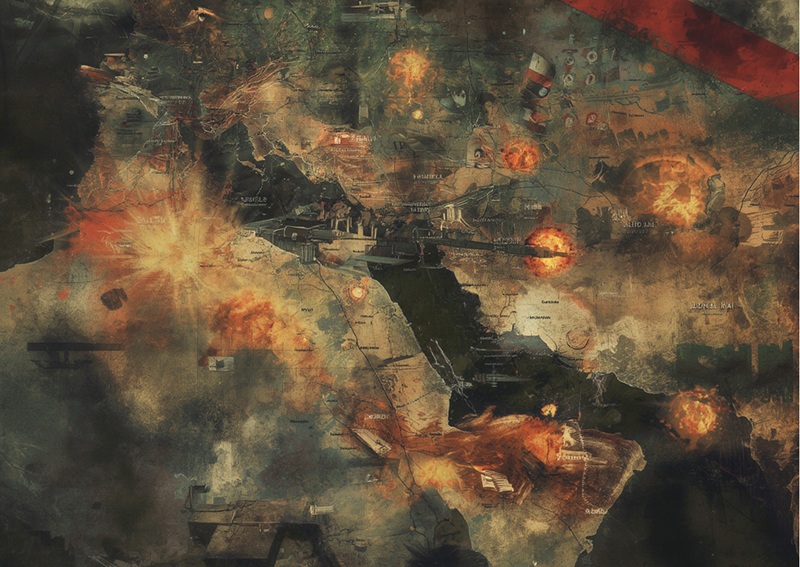
El ensayo analiza la guerra entre Estados Unidos, Israel e Irán desarrollada en 2026 desde una perspectiva operacional y estratégica. Examina los factores geopolíticos que condujeron al conflicto, el desarrollo de la Operación “Furia Épica”, la campaña aérea conjunta, la respuesta asimétrica iraní mediante misiles y drones, la disputa por el estrecho de Ormuz y la expansión regional de la confrontación. Asimismo, evalúa las implicancias militares, energéticas y geopolíticas de la guerra, identificando las principales lecciones para la seguridad internacional contemporánea.
Abstract
This essay analyzes the 2026 war between the United States, Israel, and Iran from an operational and strategic perspective. It examines the geopolitical factors that led to the conflict, the development of Operation Epic Fury, the joint air campaign, Iran’s asymmetric response through missiles and drones, the dispute over the Strait of Hormuz, and the regional expansion of the confrontation. Furthermore, it assesses the military, energy, and geopolitical implications of the war, identifying the principal lessons for contemporary international security.
Fecha de recepción: 26 de enero de 2026.
Fecha de aceptación: 30 de mayo de 2026.
Fecha de publicación: 30 de junio de 2026.
Referencias
Agencia Internacional de Energía. (2026). Energy market assessment and Strait of Hormuz security report. International Energy Agency. https://www.iea.org
Al Jazeera. (2025). Iran-Israel conflict: Regional escalation and military developments. Al Jazeera Media Network.
Ámbito. (2009, 22 de diciembre). Irán: funeral de ayatolá derivó en un acto opositor. https://www.ambito.com/edicion-impresa/iran-funeral-ayatola-derivo-un-acto-opositor-n3599519
Amnistía Internacional. (2026). Iran protests and human rights assessment report. Amnesty International.
Banco Mundial. (2025). Global economic prospects 2025. World Bank. https://www.worldbank.org
Casa Blanca. (2022). National security strategy of the United States of America. Executive Office of the President of the United States. https://www.whitehouse.gov
Center for Strategic and International Studies. (2025). Missile proliferation and regional security in the Middle East. CSIS. https://www.csis.org
Chatham House. (2025). Iran, regional security and conflict management in the Middle East. Royal Institute of International Affairs. https://www.chathamhouse.org
CNN en Español. (2026). ¿Cómo afectaría una guerra con Irán al estrecho de Ormuz, al petróleo y al precio de la gasolina? https://cnnespanol.cnn.com/2026/03/18/eeuu/guerra-iran-estrecho-ormuz-petroleo-gasolina-gfx-trax
Departamento de Defensa de los Estados Unidos. (2026). Operational assessments of Middle East contingency operations. U.S. Department of Defense.
El Mundo. (2026, 1 de marzo). Los ataques en Oriente Próximo. https://www.elmundo.es/internacional/2026/03/01/69a2c9fce4d4d823778b45bb.html
Fondo Monetario Internacional. (2025). Islamic Republic of Iran: Economic outlook report. International Monetary Fund. https://www.imf.org
Human Rights Watch. (2026). Iran: Human rights situation report. Human Rights Watch. https://www.hrw.org
International Crisis Group. (2025). Managing escalation risks in the Middle East. International Crisis Group. https://www.crisisgroup.org
International Institute for Strategic Studies. (2025). The Military Balance 2025. Routledge. https://doi.org/10.4324/9781003400226
Jerusalem Post. (2025). Operational lessons from the Iran-Israel confrontation. The Jerusalem Post.
Joint Chiefs of Staff. (2023). Joint Publication 5-0: Joint planning. U.S. Department of Defense. https://www.jcs.mil
Naciones Unidas. (2025). Report of the Secretary-General on regional security developments in the Middle East. United Nations. https://www.un.org
Naciones Unidas. (2026). Report of the Secretary-General on the situation in the Middle East and international peace and security. United Nations. https://www.un.org
Organismo Internacional de Energía Atómica. (2025). Verification and monitoring in the Islamic Republic of Iran in light of United Nations Security Council Resolution 2231 (2015). International Atomic Energy Agency. https://www.iaea.org
Pimentel, V., Ramos, E., & Guzmán, A. (2025). El conflicto Irán–Israel–EEUU de 2025: Doce (12) días que han redefinido la guerra contemporánea. Pensamiento Conjunto, 13(2), 97–112.
RAND Corporation. (2024). Future warfare and multidomain operations in the twenty-first century. RAND Corporation. https://www.rand.org
Reuters. (2025). Iran nuclear program and regional security tensions. Reuters. https://www.reuters.com
Stockholm International Peace Research Institute. (2025). SIPRI yearbook 2025: Armaments, disarmament and international security. SIPRI. https://www.sipri.org
The Economist. (2025). The geopolitical consequences of escalation in the Persian Gulf. The Economist.
United States Central Command. (2026). Regional security operations and force deployment assessment. U.S. Central Command. https://www.centcom.mil
United States Energy Information Administration. (2025). World oil transit chokepoints: Strait of Hormuz. U.S. Department of Energy. https://www.eia.gov
United States Naval Institute. (2025). Maritime security and naval operations in the Persian Gulf. U.S. Naval Institute. https://www.usni.org
World Bank. (2025). Middle East and North Africa economic update. World Bank.
Yahoo Noticias. (2026). Fotos y videos: La operación militar “Furia Épica” en imágenes. Yahoo Noticias. https://es-us.noticias.yahoo.com/fotos-y-videos-la-operacion-militar-furia-epica-de-eeuu-e-israel-contra-iran-en-imagenes-101115429.html
Descargas
Publicado
Número
Sección
Licencia
Derechos de autor 2026 Óscar Jorge Mogollón Sandoval, Víctor Manuel Pimentel Roque

Esta obra está bajo una licencia internacional Creative Commons Atribución 4.0.
Todos los contenidos publicados son de acceso abierto (open access), con pleno reconocimiento a los autores sobre su obra. Para su publicación, los autores aceptan ceder los derechos de publicación en favor de la Escuela Superior Conjunta de las Fuerzas Armadas y la revista Pensamiento Conjunto, de acuerdo con los términos de la licencia Creative Commons: CC BY 4.0 license.
Por lo tanto, los autores y también los lectores pueden copiar y difundir el artículo en la versión final publicada en línea por la revista Pensamiento Conjunto, siempre que se reconozca e identifique al autor (o autores) del artículo, no se haga uso comercial del artículo final publicado, ni se trate de obras derivadas o versiones modificadas.
© 2019. This work is licensed under a CC BY 4.0 license.